Donald Trump: From Queens Developer to the 47th President
A profile of Donald Trump, from his Queens childhood and New York real estate career to a second term shaped by tariffs, a tax law and a record shutdown.
By Wade Ellison
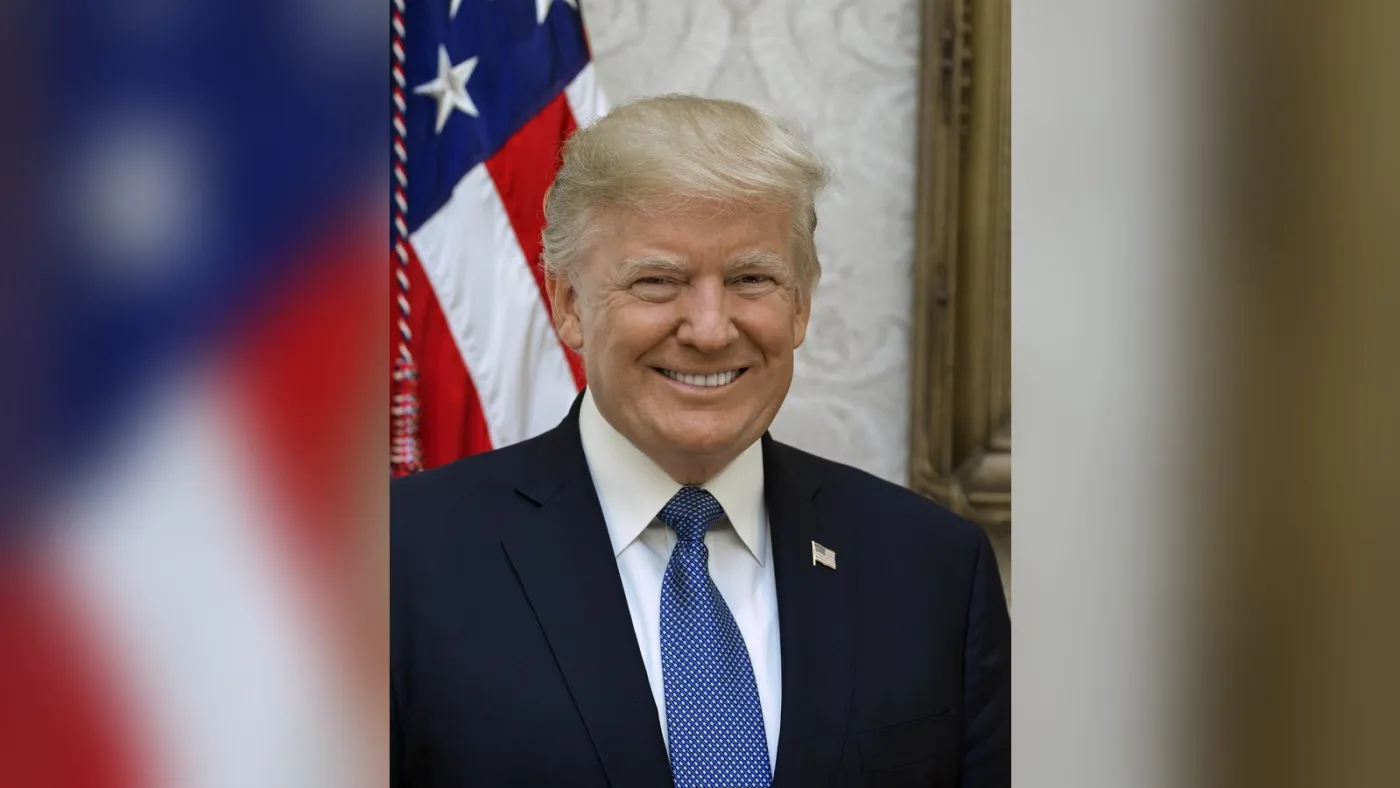
Donald John Trump, 79, is in the eleventh month of his second term as the 47th president of the United States. He is the first American president convicted of a felony, and he returned to office after losing it in 2020. Before politics he was a New York real estate developer and a television host. His career has rarely moved quietly.
Queens to Manhattan
Trump was born June 14, 1946, at Jamaica Hospital in Queens, the fourth child of Fred Trump and Mary Anne MacLeod Trump. He attended the Kew-Forest School and then the New York Military Academy. He began at Fordham University in 1964, transferred to the Wharton School at the University of Pennsylvania, and graduated in May 1968 with a bachelor’s degree in economics.
He joined his father’s company, Trump Management, that year and became its president in 1971. He expanded the business under the Trump Organization name. Its projects included Trump Tower in Manhattan, several Atlantic City casinos, among them the Trump Taj Mahal, and the Trump International Hotel and Tower in Chicago, which opened in 2008. Six of his businesses filed for Chapter 11 bankruptcy protection between 1991 and 2009. He also licensed his name to a wide range of outside ventures.
From 2004 to 2015 he hosted the reality series The Apprentice, which widened his name recognition well beyond the real estate trade.
First term and the years between
Trump ran as a Republican in 2016 and defeated Democrat Hillary Clinton. His first term, from 2017 to 2021, included a travel ban on seven Muslim-majority countries, expanded construction of the border wall with Mexico, and a family separation policy at the border. He signed the Tax Cuts and Jobs Act, named three justices to the Supreme Court, withdrew the United States from climate and trade agreements, and began a trade war with China. In 2020 he signed the bipartisan CARES Act in response to the COVID-19 pandemic.
The House impeached him twice, in 2019 and again in 2021, and the Senate acquitted him both times. He lost the 2020 election to Joe Biden. His efforts to overturn the result preceded the January 6, 2021, attack on the Capitol.
The years out of office brought a run of legal cases. In 2023 he was found liable in New York civil cases for sexual abuse and defamation in the E. Jean Carroll matter, and separately for business fraud. In May 2024 a New York state court jury found him guilty on 34 counts of falsifying business records. He received a sentence with no penalty. Two federal cases, one over classified documents and one over the 2020 election, were dismissed without prejudice.
In November 2024 he defeated Vice President Kamala Harris.
The second term so far
Trump was sworn in January 20, 2025, with JD Vance as vice president. On his first day he granted clemency to the defendants charged over the January 6 riot. He issued more executive orders in his first 100 days than any earlier president, imposed a federal hiring freeze, and worked with Elon Musk on the Department of Government Efficiency, which cut staff and dismantled agencies including USAID. By late February more than 30,000 federal employees had been fired. The orders drew a steady stream of lawsuits.
On April 2 he announced what he called “Liberation Day” tariffs, using the International Emergency Economic Powers Act to set a minimum 10% tariff on nearly all trading partners. No president had used that law to impose tariffs before. Stock markets fell, and on April 9 the higher country-specific rates were paused for 90 days, except for China. The Court of International Trade ruled against the tariffs in May and the Federal Circuit upheld that ruling in August, but both rulings were stayed. The Supreme Court heard arguments in the consolidated cases in November 2025 and had not ruled as of Nov. 28.
On July 4 he signed the One Big Beautiful Bill Act, which passed the Senate 51-50 with Vance breaking the tie. The law made the 2017 individual income tax rates permanent, created temporary deductions for tips and overtime, added Medicaid work requirements, and sharply increased money for defense, border security and immigration enforcement. The Congressional Budget Office estimated it would add $2.8 trillion to deficits by 2034 and leave 10.9 million more Americans without health insurance.
The federal government shut down Oct. 1 when funding lapsed. At 43 days it was the longest full shutdown on record. Trump signed the bill ending it Nov. 12, with funding extended to Jan. 30, 2026. In early October a Gaza ceasefire plan he had put forward between Israel and Hamas was signed.
As of late November 2025, the tariff case and the January funding deadline remained open questions for the White House.
Sources: Wikipedia articles on Donald Trump, the One Big Beautiful Bill Act, the 2025 federal government shutdown and tariffs in the second Trump administration.