Kansas grows most of the nation’s grain sorghum, and this year’s harvest is running well behind average
Kansas had 69% of its sorghum harvested by Nov. 15, against an 87% average. The state grew about 58% of the U.S. crop in 2025, USDA figures show.
By Opal Nickel
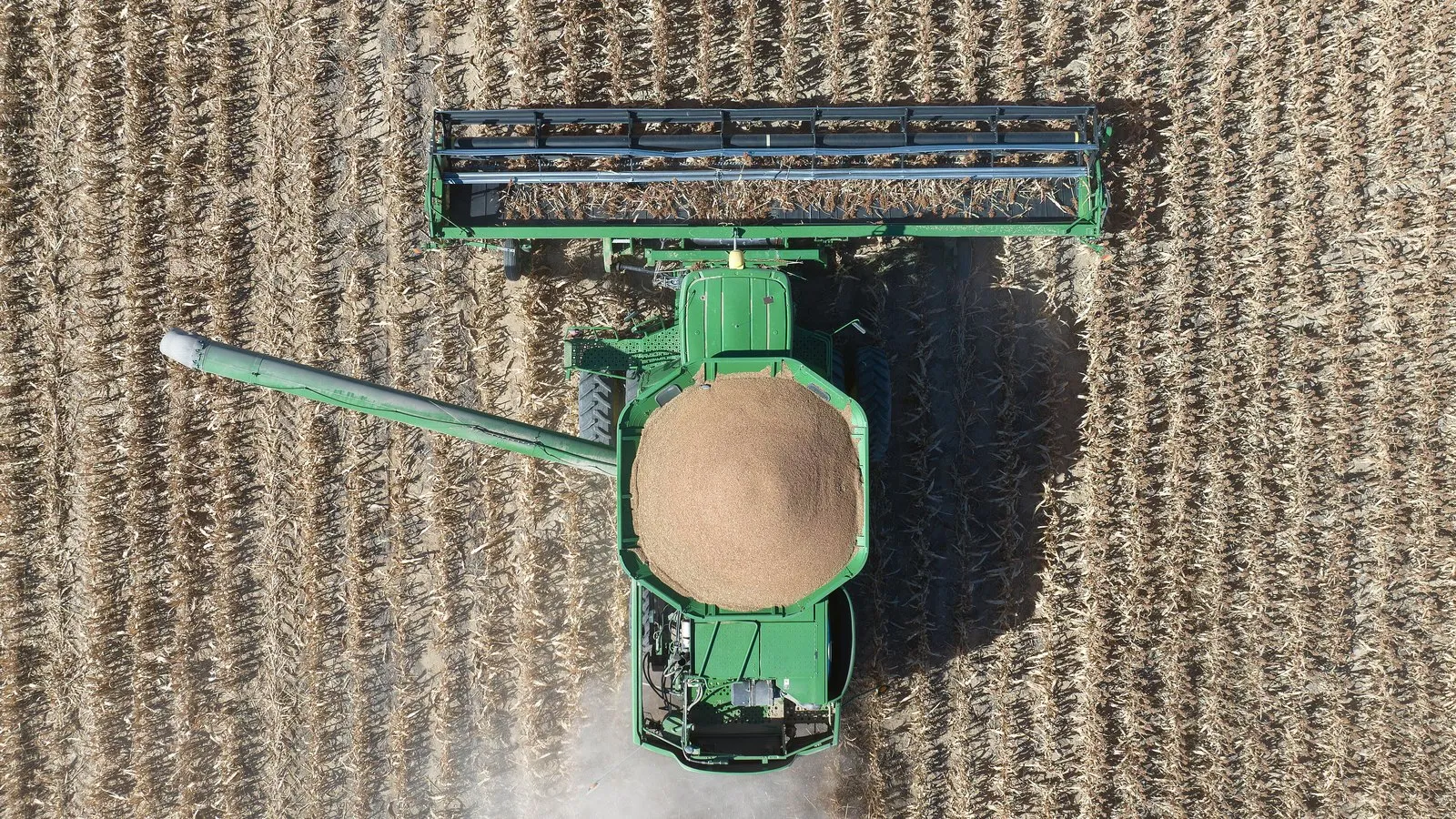

Kansas grew more grain sorghum than any other state last year by a wide margin, and this fall’s harvest is running well behind its usual pace. As of Sunday, Nov. 15, Kansas farmers had harvested 69% of their sorghum, according to the U.S. Department of Agriculture’s weekly Kansas crop progress report, released Monday. That compares with 76% at the same point last year and a five-year average of 87%.
The gap has narrowed a little. A week earlier, the National Agricultural Statistics Service had the crop 57% harvested against an 80% average, with 95% of it mature, which the Courier noted in its Nov. 13 crop report story. Crews had more time in the field last week: the agency counted 5.9 days suitable for fieldwork in the week ending Nov. 15, up from 4.3 the week before.
Why Kansas sorghum matters nationally
The state’s share of the crop is what makes a slow harvest here a national number. In its Crop Production 2025 Summary, published in January, NASS estimated Kansas produced 252 million bushels of grain sorghum in 2025, out of 436.8 million bushels nationwide. That is about 58% of the U.S. crop. Texas was a distant second at 100.7 million bushels.
Kansas farmers planted 3 million acres of sorghum in 2025 and harvested 2.8 million acres for grain. The average yield was 90 bushels an acre, up from 65 bushels in 2024 and 52 bushels in 2023, according to the same report. The 2025 Kansas crop was about 38% larger than 2024’s 182 million bushels.
The 2026 production estimates for Kansas will come later. For now, the weekly reports only track how much of the crop is out of the field.
The rest of the fall harvest
Other fall crops were closer to normal. Corn was 92% harvested, near last year’s 91% and behind the 96% average. Soybeans were 87% harvested, near 89% a year ago and behind the 92% average. Sunflowers were 74% harvested, against an 86% average.
Cotton was the exception. Kansas growers had harvested 61% of the crop, well ahead of 29% at this point last year and ahead of the 55% average, though the condition ratings were poor: 42% of the cotton was rated poor or very poor and 17% good or excellent.
In the south-central district, which includes Cowley County, 99% of the corn had been harvested. The report’s district table does not break out sorghum.
Wheat is nearly all in the ground
Winter wheat planting is close to finished. The state’s crop was 96% planted, near 93% last year and the 97% average, and 86% had emerged. In the south-central district, 93% was planted and 81% had emerged, behind the northwest, west-central and southwest districts, where planting was 99% to 100% done.
Wheat condition improved over the week. The report rated 12% of the crop excellent and 45% good, 57% in the top two groups, up from 51% a week earlier. Thirty percent was rated fair, 9% poor and 4% very poor.
Soil moisture held mostly steady. Topsoil was rated 72% adequate and 9% surplus, with 19% short or very short. Subsoil was 67% adequate and 7% surplus. Pasture and range conditions were rated 3% excellent, 33% good, 39% fair, 15% poor and 10% very poor.
NASS builds the weekly numbers from county-level reports by the Farm Service Agency, K-State Research and Extension and other reporters around the state. The next Kansas report is expected Monday. For more on farming in and around Cowley County, see the Courier’s agriculture coverage, including its profile of Gage and Sarah Werner’s Werner Creek Farm.